If you want to know home storage organization products: how to choose the right ones, start with a tape measure, not a shopping cart. Nearly every buying guide we reviewed puts measuring first, and Homefulness makes it tip number one. The Home Edit goes a step further: write down details like shelf depth and drawer height instead of eyeballing them.
Four numbers are worth jotting down before you buy anything:
Add a fifth, informal check: how will the item get into the room? Narrow hallways and tight bathroom doors trip people up more than you’d expect. Snap a photo of the space with your tape measure in the frame, so you can hold product dimensions up against the real thing while you shop.
The aim, as Homefulness puts it, is to use the full width, depth and height of a space rather than leaving dead air above or behind your containers. A few measured minutes up front are the cheapest way to dodge returns.
Once you know what fits, decide what kind of storage each group of stuff deserves. Topwebstory argues that you’ll stick with an organizing system based less on how it looks and more on how often you touch it. That gives you an easy sorting method: daily, weekly, seasonal.
Daily items (toothbrushes, cooking oil, everyday utensils, the soap you grab twice a day) belong in open, grab-and-go storage. If you have to lift a lid or open a door to reach something you use every morning, you’ll eventually stop putting it back. Open organizers, hanging racks and wall-mounted shelves do the job well. Our kitchen hanging organizer rack with hooks is a good example: everything you cook with stays visible and within reach.
Weekly items (spare towels, baking trays, cleaning supplies) can sit one step back, in drawers, pull-out racks or lidded bins on lower shelves. You don’t need instant access, but you shouldn’t have to move three other things to get at them either.
Seasonal or backup items (holiday dishes, spare linens, bulk refills) suit closed bins, high shelves and the back of cupboards. Falahifarms recommends buying sturdy products for high-traffic areas and saving money on seasonal storage, which makes sense: a bin you open twice a year doesn’t need premium hardware.
Weight matters too. If a container will hold heavy items, think about how you’ll move it. A bin that gets lifted down from a shelf needs handles. Something heavy that you reach for often may work better as a pull-out unit than a carried one. Our new kitchen storage rack with slide rails fits that case nicely, since the load slides toward you instead of being hoisted.
No single format wins everywhere. Here’s how the main options stack up, based on what each does best.
Open shelves are best for daily-use items and for rooms where you want things visible and quick to grab. Their big strength is speed: nothing stands between you and the item. The catch is that everything on display needs to look tidy, so they reward people who like a curated look. Wall-mounted sets such as the 4-pack small floating shelves add display and storage space without using up floor area, and the bathroom shelves collection covers wet-room versions.
Bins and baskets are best for corralling loose small items and for seasonal storage. Their big strength is flexibility: you can swap contents without buying new furniture. Homefulness warns that mismatched products can leave a space looking scruffy, so pick one or two styles and repeat them. The Home Edit also suggests buying a variety of sizes, because your first pick may not work once you see it in place.
Drawers and pull-out racks are best for things you want hidden but still reachable, like cutlery, spices and small tools. Their big strength is access to the back of a cabinet. They cost more in clearance (you need room for the pull), which is why the measuring step matters so much.
Multi-use furniture is best for small homes where every piece has to earn its footprint. Homes & Gardens advises choosing products that serve more than one purpose, with the storage ottoman that doubles as seating as the classic example. Our space-saving furniture range follows the same logic. The downside is that a piece doing two jobs can compromise on both, so check capacity before you commit.
One more thing to weigh is upkeep. Open storage generally asks more of you in terms of tidying, because mess is visible. Treat that as a reason to put only your daily essentials on open display, not as a reason to avoid it.
Small homes and rented homes share one rule: choose storage that works with the room, not against it.
For renters, removable solutions are the safest bet. Suction-based and tension-based products, over-door organizers and freestanding units skip the drilling, which protects your deposit. Always read the weight guidance on a product and test with a light load before trusting it with anything heavier. If you do have permission to mount things, wall shelves free up the most floor space.
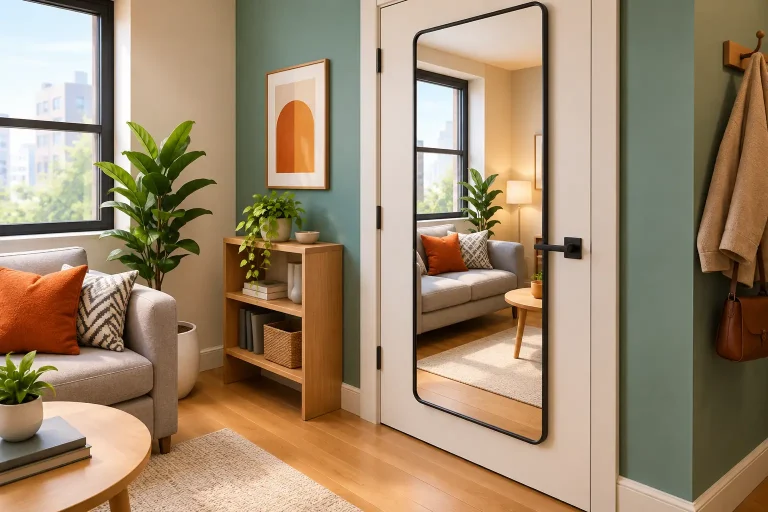
For tight rooms, think vertical. Door-back storage, tall narrow shelving and over-the-toilet units use height that would otherwise go to waste. A mirror can pull double duty by making the room feel bigger, and our guide to door mirrors that make small rooms work harder covers that angle. If you’re shopping for the bathroom specifically, our guide to choosing shower shelves walks through fit and moisture considerations.
For caregivers and seniors, reachability changes the whole equation. Storage sitting between roughly waist and shoulder height is generally easier to get to than anything needing a deep bend or a stretch overhead. Look for easy-grip handles, light containers and wide openings, and keep frequently used essentials at the front. Open shelving and pull-out racks often beat lidded boxes here, since lids and awkward latches can become a daily frustration. Keep walkways clear too: organizers at floor level can turn into obstacles. For related everyday-living products, browse our home care collection, and if a pet shares the household, our guide to pet ramp selection covers safer access for animals. None of this replaces advice from a health professional; it’s simply about making daily routines easier.
The quickest way to waste money is to buy a whole house of organizers in one weekend. Falahifarms recommends starting with your biggest problem areas, and that’s the right instinct. Pick the one zone that annoys you most (the overflowing bathroom counter, the chaotic cutlery drawer) and fix only that.
A simple routine works well:
This also answers a question many beginners ask: what’s the best way to start organizing a home? Start small, in the spot that causes the most daily friction, and let that win guide your next purchase.
Even careful measuring can miss something, so it helps to shop where a mistake isn’t costly. At TopHome Club, every order is covered by a 30-day money-back guarantee with easy returns, and shipping is free worldwide. You can test a product in the actual space and send it back if it isn’t right. If you’re ready to begin, browse the kitchen gadgets and bathroom shelves collections, or see everything at once in our full product range. Measure first, buy one zone, and build from there.



Leave a comment