Ask five guides how high to hang shelves in bathroom wall space above a toilet and you’ll get five different answers. Lowe’s how-to advice says to leave at least 24 inches between the tank lid and the bottom of a shelf or cabinet, so you can lift the lid and dodge head bumps. Other guides say 12–18 inches above the tank, and Engineer Fix puts the minimum at 10–12 inches above the tank lid. They look contradictory, but each one answers a slightly different question.
Here’s how to square them. About 12 inches is the practical floor. It clears a closed tank lid and fits a roll of toilet paper or a small basket, but not much else. At that height you’ll be reaching around the shelf every time you lift the lid for a flapper or fill-valve fix, and a tall person may brush the underside. The comfortable zone sits between 20 and 24 inches. You can open the tank, stand up from a seat without cracking your head, and still reach the lowest shelf easily.
One more thing: the 24-inch figure is a design guideline, not a legal requirement. Building code covers clearance around the toilet (more on that in the next section), but the vertical gap above the tank is a comfort and access call. Treat 12 inches as the tightest you should go and 20–24 inches as the target.
Is it safe to put shelves above the toilet? Yes, if you choose sensibly. Keep heavy or breakable items off the lowest shelf, since anything that falls lands on porcelain. Store daily items like toilet paper and hand towels down low, and save the higher shelves for decorative or seldom-used things. If your tank has a top-mounted flush button, or you open the tank often, lean toward the high end of the range.
Want to browse options before you pull out the tape measure? Our bathroom over toilet shelves page collects the main styles, and our bathroom storage rack over the toilet shelf page covers freestanding racks that need no drilling at all.
Height gets most of the attention, but depth decides whether a bathroom feels comfortable or cramped. Over-toilet cabinets typically run 7–12 inches deep, and one guide says 9–12 inches suits toilet paper rolls and small baskets while anything over 18 inches sticks out too far. In most small bathrooms, 8–10 inches is the sweet spot. It holds folded towels and baskets without leaving a hard edge at head height when you stand.
Width is more forgiving. A shelf about as wide as the toilet, roughly 16–20 inches, looks tidy and keeps the wall balanced. If you have room and want more storage, Engineer Fix suggests 2–3 feet. Wider shelves also spread the weight better, because you can land two brackets on two studs.
Now the building code, which people often misquote. IRC 2024 section P2705, as summarized in this code explainer, calls for at least 15 inches from the toilet centerline to any side wall, partition or obstruction, plus at least 21 inches of clear space in front of the bowl. The Uniform Plumbing Code, used in some jurisdictions, asks for 24 inches in front instead of 21. These numbers come from secondary summaries of the code, so if you’re renovating or need a permit, confirm the current text with your local authority.
What does that mean for shelves? Code clearance concerns floor-level space around the fixture, not the wall above the tank. The side figure still counts, though, when you put a deep shelf or cabinet beside the toilet rather than above it. One guide lists shelves that poke into that 15-inch side zone as a common layout mistake. A slim 6–8 inch shelf beside the toilet is usually fine for sitting and reaching, but a deep cabinet there can make the room feel tight and may conflict with code. Measure from the toilet’s centerline, not from the edge of the bowl.
Steam, splashes and weak ventilation are hard on shelves, so the material you pick matters as much as the size. Can wood survive in a bathroom? It can, but not every wood product will.
Mass-produced floating shelves are often MDF, and makers of bathroom shelves warn that MDF has a short lifespan in steamy rooms. Sealed engineered wood holds up better, but sealing is essential, and one chip or exposed edge lets moisture right in. Unfinished pine is risky for the same reason. Solid hardwoods like teak resist moisture far better, and this buying guide goes into moisture-proof options in detail. Vendors quote lifespan figures that vary widely, so use them as a rough ranking, not a promise.
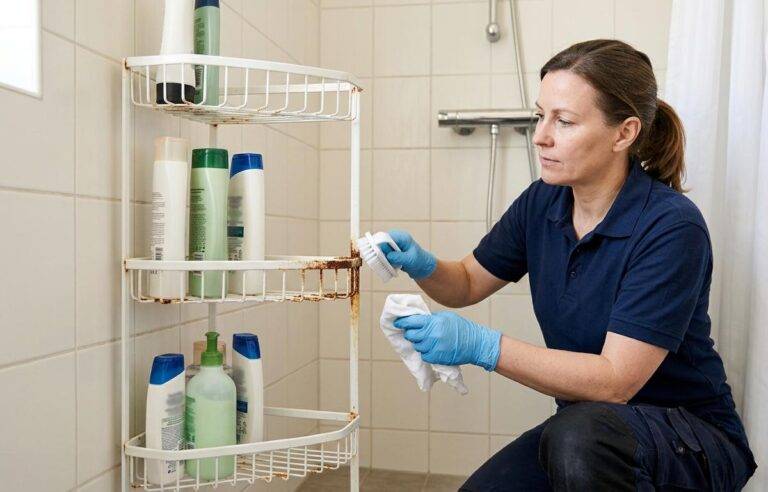
For spots that get direct water, such as beside the shower, stainless steel and brass lead on durability, with tempered glass a strong contender, while untreated wood isn’t built for constant shower moisture. If you’re shopping for those zones, our guide to choosing shower shelves and our corner shower shelf stainless steel buying guide walk through the options. Corroded metal is a nuisance too, so bookmark our guide on how to clean shower shelf rust safely.
People forget about hardware. Standard steel screws and brackets rust in bathroom humidity, so go with stainless or coated hardware. Rust streaks run down the wall and weaken the fixing over time, and that matters more than how it looks.
To keep mold off wood shelves, build three habits. Seal every surface, including the underside and back edge. Run the exhaust fan or crack a window after showers. And wipe up standing water instead of letting baskets sit damp.
A shelf is only as strong as whatever it hangs from. How much weight can a shelf above the toilet hold? One installation guide estimates 15–25 lb when mounted to studs and about 10–15 lb with quality anchors in drywall. That’s a vendor-style estimate, not a tested rating, so use it for planning and stay well under it. Towels, a few bottles and a small plant are fine. A stack of heavy jars or a big ceramic vase is not.
Grab a stud finder and try to land at least one fixing in a stud. Set brackets about 6–8 inches from each end, and add a center bracket on shelves longer than 36 inches, as the same guide recommends. Spreading the load across two studs beats trusting a single anchor, especially on wider shelves.
When studs aren’t where you need them, use proper drywall anchors rated for the load, not the plastic plugs that come in the box. Tile, plaster and brick each call for a different drill bit and anchor type, so check the anchor packaging for your wall, and drill tile slowly with a suitable bit so it doesn’t crack. Hardware counts here too: make sure screws and anchors resist corrosion, as covered above.
Renting, or just don’t want holes? You have gentler routes. Freestanding over-toilet racks stand on the floor and straddle the tank, so the wall stays untouched; see our bathroom storage rack over the toilet shelf page. Adhesive and tension-pole options exist too, but their weight limits are usually lower and differ by product, so follow the manufacturer’s rating and keep loads light. If you’d rather drill and get a clean look, our floating shelves in bathroom install guide covers the steps in detail. Are floating shelves better than over-toilet cabinets? Floating shelves look lighter and use less visual space, while cabinets hide clutter behind doors. Want concealed storage? Go cabinet. Prefer an open, airy look? Go floating.
In a small bathroom every inch counts, so choose shelves that earn their spot. Start with how you really use the room. If towels and toilet paper are the main clutter, one or two shelves above the toilet usually fix it. If counter space is the headache, a shallow shelf beside the vanity or mirror keeps daily items off the sink. Our guide on how to organize a small bathroom on a budget has more ideas for wringing storage out of tight rooms, and our bathroom shelves category lets you browse styles by type.
Keep the layout calm. Stick to slim depths, repeat one material and finish, and leave some wall empty. One well-placed 8-inch shelf looks better and works harder than three mismatched ones jammed together.
Reach height deserves more thought than it usually gets. For seniors, wheelchair users and caregivers, high shelves above the toilet can be tough to reach safely, and stretching overhead in a wet room risks a fall. Put everyday items such as toilet paper, wipes and medications on the lowest shelf, or at a comfortable chest-to-shoulder height, not up top. Keep the upper shelves for rarely used or decorative things. Lower shelves may also call for the 20–24 inch clearance rather than the minimum, so the tank stays accessible when a caregiver is cleaning or doing repairs. Choose rounded corners where you can, skip shelves that jut out at head height, and keep heavy items low and close to the wall.
The short version: measure your toilet centerline and side clearance first. Pick a height between 12 and 24 inches that suits tank access. Keep depth to roughly 8–10 inches. Choose stainless or coated hardware and a moisture-resistant material. Anchor into studs where you can. And put the things you reach for most at the most comfortable height. Get those five things right and your shelves in bathroom wall space will stay useful, safe and rust-free for years.


Leave a comment