January makes people look at their homes with fresh eyes. The holiday decorations come down, and suddenly that cluttered corner of the bedroom or the crowded hallway feels like a problem worth solving. If you rent or live in a compact apartment, a full length door mirror is one of the simplest upgrades going. You get a place to check your outfit before you leave, and you don’t have to patch holes in the wall when you move out.
That no-drill appeal is the real draw. Over-door products are built around hanging on the door edge, which is why renters and small-space shoppers love them. A mirror that hangs from the top of a door works the same way. It goes up in seconds, comes down just as fast, and leaves the door and the wall behind it untouched.
January also suits the way people set routines. Maybe you want smoother mornings, or you want to dress with more intention, or you’re finally ready to tidy a bedroom that has felt cramped all winter. A mirror at full height helps with all of that. You see your whole outfit from head to toe, and in a small room a large reflective surface bounces light around so the space feels less boxed in.
The timing works on the buying side too. Winter keeps people indoors, so the rooms they live in get a harder look, and dark afternoons make a bright reflective surface more welcome. The post-holiday weeks are also when many shoppers hunt for deals and space-saving ideas, which makes it a natural moment to browse cheap upgrades that work fast.
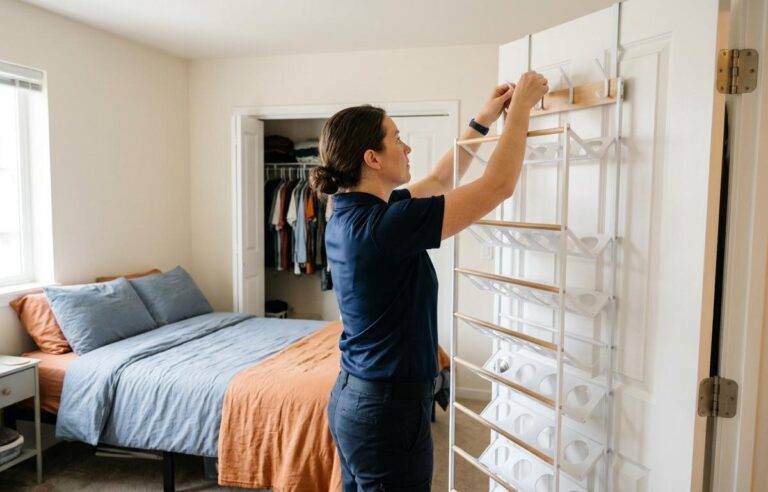
Think of the mirror as one piece of a larger plan. Pair it with other renter-friendly storage, like an over door shoe rack, and a single door becomes a hardworking part of the room. Getting more function from surfaces you already have is the mindset behind most January organizing projects.
Not every full length door mirror hangs the same way, and the mounting style decides whether it suits a rental, a shared room or a permanent bedroom setup. Here are the main approaches.
Over-the-door mirrors are the most renter-friendly option. Hooks or a top bracket sit over the upper edge of the door, so the mirror hangs down its face. Nothing is screwed in, so you can move it between doors or take it with you when you leave. Check the gap between the door and the frame, though. Hooks need enough clearance to sit properly, and a door that closes tightly against its frame may not accept a thick bracket.
Wall-mounted mirrors attach with screws or heavy-duty fixings. They’re the most stable choice, best if you own the home or have permission to drill. They don’t depend on a door at all, so you can put the mirror wherever the light is best.
Leaning or freestanding mirrors simply rest against a wall or door at a slight angle, usually with a support at the back. They need no installation, but they take up a strip of floor space and can feel less secure in a busy room. They suit larger bedrooms better than tight apartments.
Hanging or hook-and-hinge styles sit in between, combining a frame with hardware that lets the mirror hang flat against a door or wall. If you lean toward this kind, read the product description for how the hardware attaches and what it expects of the surface.
If you want zero marks on the wall and easy removal, go over-the-door. If you plan to stay for years and want a mirror that never wobbles, wall mounting is more permanent. Our door mirrors small room guide covers layouts that make the most of limited floor area.
Frame and mirror material matter as well. Glass gives the clearest reflection but is heavier, while lighter frames are easier to hang and handle. Whatever you pick, look for a product page that states how it mounts and what it’s made from, so there are no surprises when it arrives.
Size is where most people go wrong, so measure before you buy. The mirror has to fit the door it hangs on and suit the room it lives in, and those are two separate checks.
Start with the door. Measure its width and height, and note the thickness at the top edge if you plan to use an over-the-door style. The mirror should be narrower than the door so it hangs cleanly without catching on the frame or hinges. Also check which way the door swings. A mirror that adds thickness on the swing side can bump against furniture or walls.
Then think about what you want to see. A true full length view means checking yourself from head to toe, so consider your own height and where you’ll stand. A short mirror will crop a taller person’s reflection, and no clever hanging will fix that. If several people of different heights share the mirror, go taller and mount it so the top sits comfortably above the tallest person’s head.
Room size matters too. In a narrow bedroom or tight hallway you’ll have less distance between you and the mirror, which limits how much of yourself you can see at once. A slightly larger mirror can compensate, but only if there’s enough door or wall space to carry it without crowding. In a very small room, a slimmer mirror often feels less imposing than a wide one.
Try this simple test: cut a strip of paper or masking tape to the size on the product page, tape it to the door, and stand back. You’ll see at once whether it fits visually and whether it clears handles, locks and trim. It costs nothing and prevents the most common return, a mirror that looked right online but proved awkward in the actual doorway.
If your door has a decorative panel, a glass inset or an unusual profile, check the product description for compatibility before ordering. If the details are unclear, wait until the specification is confirmed rather than guessing.
Where you hang a mirror affects how useful and how safe it is. In a small apartment, every placement choice involves trade-offs, so think through light, traffic and stability first.
For light, a mirror opposite or at an angle to a window can bounce daylight deeper into the room, which is welcome when January days are short. Avoid an angle that throws glare straight back at you. A spot near a lamp or ceiling light usually gives the most even reflection for checking your outfit.
For traffic, keep the mirror out of the main path. In a narrow hallway or a bedroom with a swinging door, a mirror at body height can get bumped by bags, laundry or people squeezing past. The back of a bedroom door, where it stays flat against the wall most of the time, often works well. Just make sure the door still opens fully without the mirror striking anything.
Stability deserves real attention. A large mirror is heavy and can break, so secure it according to the manufacturer’s instructions and check that the hooks or brackets are seated properly. With children or pets, take extra care: a mirror that sways, leans or is easy to pull down is a hazard. For leaning styles, make sure the base is stable and ask whether a child could climb on or tug at the frame. Check official guidance from consumer safety bodies before settling on a placement, since anti-tip recommendations vary by product and setup.
Door movement is easy to overlook. A mirror hung over a door that gets slammed or opened hard can rattle, shift or knock against the frame. If the door is used often, a snug fit or a stable mount matters more than it would on a rarely used closet door.
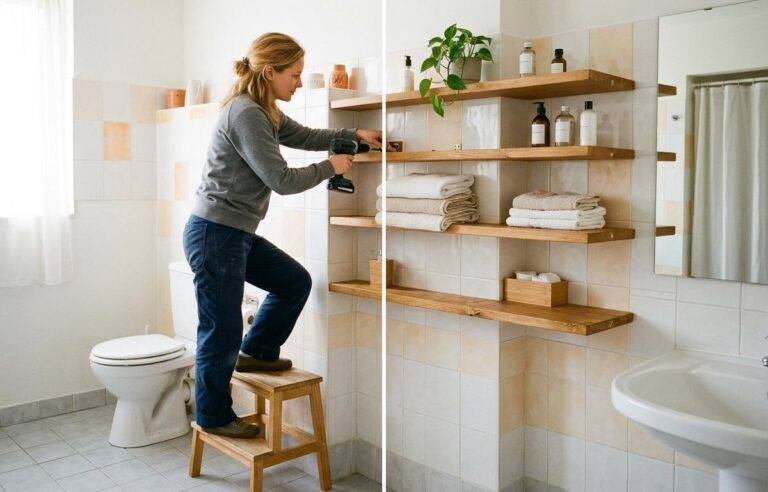
Finally, keep the area tidy. A clear floor in front of the mirror is safer and makes the space feel larger. Our guide on how to organize a small bathroom on a budget applies well here, since the same principles of vertical storage and clear floors work in any tight room.
A new-year refresh doesn’t need a big budget or a weekend of drilling. TopHome Club is built around affordable, space-saving home gadgets, and a full length door mirror fits right in: practical, easy to live with, and sized for homes where every inch counts.
Bring your measurements when you shop. Know your door width and height, decide whether you want an over-the-door, wall-mounted or leaning style, and check the product page for how it mounts and what it’s made of. Matching those details to your home is the surest way to get a mirror you’ll keep using instead of one that ends up in the return pile.
It also helps to think beyond a single item. The mirror is one piece; the rest might be shelving, a shoe rack or a tidy-up of the room it will sit in. Browsing our products and the space saving furnitures collection can give you ideas for rounding out a tight bedroom or small studio.
TopHome Club backs your purchase with free worldwide shipping, easy returns and a 30-day money-back guarantee, so you can try a new mirror at home with confidence. If it doesn’t fit your door or your space the way you hoped, you’re not stuck with it. That safety net matters for a product where fit counts so much.
Start the year with one small change that makes a room feel more put together. Measure your door, choose the mounting style that suits your home, and pick a full length door mirror that earns its spot on the door.



Leave a comment