The jump down from a sofa can feel routine until your dog hesitates, lands awkwardly, or starts avoiding their favorite spot altogether. This guide to pet ramp selection helps you choose a practical mobility solution that makes beds, couches, cars, and entry steps easier to reach without taking over your living space or stretching your budget.
A pet ramp is not only for senior dogs. Small breeds with short legs, dogs recovering from an injury, pets with arthritis, and even healthy dogs that repeatedly jump from tall furniture can benefit from less impact on their joints. The right choice depends on where the ramp will be used, how your pet moves, and whether it needs to be stored between uses.
Measure the vertical distance from the floor to the surface your pet needs to reach. For a couch, measure to the top of the seat cushion. For a bed, measure to the mattress surface. For a vehicle, measure to the cargo floor or door opening where your pet will step.
That measurement determines how long the ramp should be. A shorter ramp takes up less floor space, but it creates a steeper climb. Steep ramps may work for an agile, confident dog, yet they are often a poor match for a pet with weak hind legs, limited balance, or joint pain.
For indoor furniture, a longer ramp with a gentler incline is usually the more comfortable option when space allows. For SUVs and trucks, a telescoping or folding ramp can provide the length needed for a safer slope while still fitting in the vehicle after use. Before buying, check that there is enough clear floor space at both ends. A ramp that blocks a hallway or lands against a coffee table will be frustrating for everyone.
The top of the ramp should sit securely against the furniture or vehicle. Look for a stable contact point that will not slide, shift, or leave a gap your pet has to step across. If the landing surface is soft, such as a thick mattress or sofa cushion, test whether it compresses enough to change the ramp angle.
Ramp length matters more than many shoppers expect. A ramp can meet the listed height range and still feel too steep for the pet using it. Think about your dog’s gait, not just their weight.
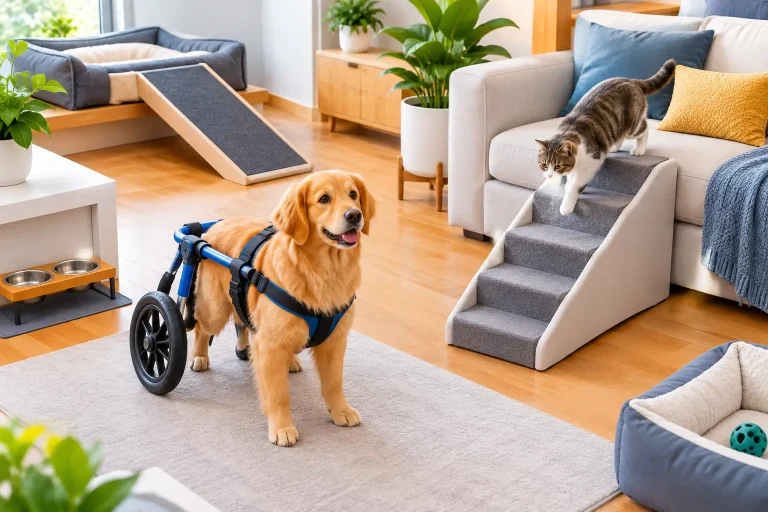
A younger medium-size dog may comfortably walk up a moderately inclined ramp. A dachshund, corgi, toy breed, or older dog with arthritis usually needs a more gradual path. Dogs using wheelchairs or other mobility support equipment may need an even gentler approach and extra width for confident footing.
If you are choosing between two sizes, the longer ramp is often worth the extra floor space for a pet with mobility concerns. The trade-off is storage. Folding designs are convenient for closets, under-bed storage, or car travel, while fixed ramps can feel sturdier and may blend better into a regular furniture setup.
Pet stairs can be a smart space-saving choice for a dog that can still lift their legs comfortably and prefers short climbs. They are not always the better answer for dogs with arthritis, spinal concerns, weak joints, or a history of refusing steps. A ramp allows a more natural walking motion and reduces repeated stepping impact.
On the other hand, ramps require more length. In a small apartment bedroom, compact stairs may fit where a properly angled ramp cannot. Choose based on your pet’s movement and your room layout, not simply on which option costs less upfront.
A ramp can be wide and sturdy yet still fail if its surface feels slippery. Carpeted traction, textured rubber, and non-slip tread give paws something to grip. This is especially helpful for dogs with long nails, reduced leg strength, or nervous footing.
The best surface is one your pet can walk on without sliding or catching their nails. Thick carpet can provide good traction, but it should be securely attached and easy to clean. Rubberized grips tend to be practical for outdoor or vehicle ramps because they handle moisture well. Smooth plastic without traction may be easy to wipe down, but it can become unsafe when wet or dusty.
Pay attention to the ramp’s side edges, too. Raised rails or subtle side lips can help a cautious pet feel guided, particularly on a narrow ramp. Very high sides may interfere with a larger dog’s stride, so this feature depends on your pet’s size and confidence.
Always compare the listed weight capacity with your pet’s current weight, then leave room for a safety margin. A ramp rated exactly at your dog’s weight is not the bargain it appears to be. Movement creates shifting force, and a stronger capacity rating generally supports better stability.
If you have a large dog, look beyond the number on the product label. Check the ramp width, hinge design, base support, and whether the surface flexes under pressure. A narrow ramp may technically hold a large dog but still feel unsteady enough to make them refuse it.
For multi-pet homes, buy for the heaviest pet likely to use the ramp. If children may be tempted to step on it, store the ramp when it is not in use and reinforce that it is pet equipment, not a toy.
Plastic ramps are usually lightweight, easy to clean, and convenient for everyday indoor use. They can also work for travel when they have strong locking mechanisms and non-slip feet. Their main trade-off is that some lighter designs may flex or shift with larger dogs.
Wood ramps often suit living rooms and bedrooms because they can look more like furniture. A well-built wood ramp can be very stable, but it is heavier to move and should have a durable, grippy walking surface. It may not be the best fit for wet outdoor conditions unless it is specifically finished for them.
Aluminum ramps are popular for vehicles because they balance strength with portability. They can be a strong choice for larger dogs, especially in telescoping styles, but check the walking surface carefully. Metal is durable, not automatically slip-resistant.
Before adding a ramp to your cart, confirm these details in the product specifications and customer information:
Also consider how much setup you can realistically manage. A heavy-duty car ramp may be an excellent choice for a large dog, but only if you can comfortably lift, unfold, and secure it. For everyday bedroom use, a fixed ramp may be more convenient because it is always ready when your pet wants to climb up.
Even a well-chosen ramp may look strange to a pet at first. Set it on a flat surface and let your dog investigate without pressure. Use treats or a favorite toy to reward a few calm steps across it. Keep sessions short, and never pull your pet up the ramp by their collar or leash.
Once they are comfortable walking across it flat, raise it to a low surface before moving to the full height. Repeat this process until your dog climbs and descends without hesitation. Descending can be harder than climbing, especially for older pets, so practice both directions.
If your dog slips, freezes, or repeatedly refuses the ramp, do not assume they are being stubborn. Recheck the slope, traction, width, and stability. A small adjustment, such as adding a non-slip mat at the bottom or choosing a longer design, can make a major difference.
A pet ramp should give your dog more freedom around the home, not create another obstacle to avoid. Choose the model that feels secure under their paws, works with your daily routine, and makes the next trip to the couch, bed, or car feel comfortably within reach.



Leave a comment