A wall mounted folding table is a flat surface that bolts to the wall on brackets or a hinge and drops down flat against it when you’re finished. Open it and you have a desk, a prep counter, a laundry-folding station or a breakfast bar. Fold it and the floor is yours again. That swap is the whole appeal, especially for renters and apartment dwellers who can’t spare a square foot.
Shopping gets muddy because the product goes by so many names. According to Mount-It’s FAQ, a wall mounted table is also called a drop leaf table, a fold down table or a Murphy table. Marketplace listings add "floating desk," "fold-down desk" and "Murphy desk." Search all of them when you compare, because one product often appears under three or four labels.
Designs fall into a few families. Drop-leaf styles use a fixed wall panel and a hinged leaf that swings down. Bracket-and-leaf models rely on iron or steel supports that prop the top up when open and fold against the wall when closed. Heavy workbench versions exist too, built for garages. One workbench-style model reviewed by Chairsfly holds up to 550 lb, but that’s a tool-bench product, not a dining-style leaf, so don’t use it as a benchmark for a kitchen or home-office table.
Capacity numbers cause the most confusion, and the sources don’t agree. One design blog, Coohom, says most well-made wall mounted tables are rated for 20–50 pounds, while another of its articles puts most residential models at 40–100 lbs when anchored into studs. Real products cover a similar spread: Mount-It’s drop-leaf table is rated to hold up to 33 lbs, Chairsfly lists a model that can hold up to 120 lbs, and Mopec’s stainless commercial model lists 150 lbs.
The gap exists because a rating is only as good as the wall behind it. A table’s stated capacity assumes proper mounting into framing. Coohom is explicit that installation into wall studs is essential for full load-bearing capacity. Treat any number on a box as a ceiling you reach only with a correct install, not something the table delivers by itself.
The practical move is to match the rating to what will actually sit on the table, then leave generous headroom:
Think about dynamic load as well. Dropping a heavy pot onto the surface is a tougher test than the pot’s resting weight. If you expect any bracing, leaning or sitting-on, go up a capacity tier.
Budget tables are the right call for light, predictable use. They’re compact, they fold close to the wall, and they cost far less than commercial pieces. Mancave Insider notes that budget drop-leaf models fold to about 3 inches of wall protrusion, and gives a 31.5-by-23.5-inch table that stows at 31.5 by 21.5 by 3.0 inches. That’s a very slim profile for a laundry nook or a hallway desk. The trade-off is lower capacity and lighter brackets, so keep loads modest and don’t treat the table as a permanent dining surface.
Heavy-duty options earn their extra cost when the table is a daily workhorse. A stainless commercial fold-up model like the one Mopec sells lists 150 lbs capacity and is built for lab-style demands, so it handles constant use without sagging. Heavier brackets, thicker tops and stronger hinges are what you’re paying for. These pieces also tend to be heavier and deeper, which asks more of your wall and your floor plan.
A quick way to decide:
If you’re also thinking about the rest of the room, our home storage organization products guide helps you decide what else belongs on the walls around the table.
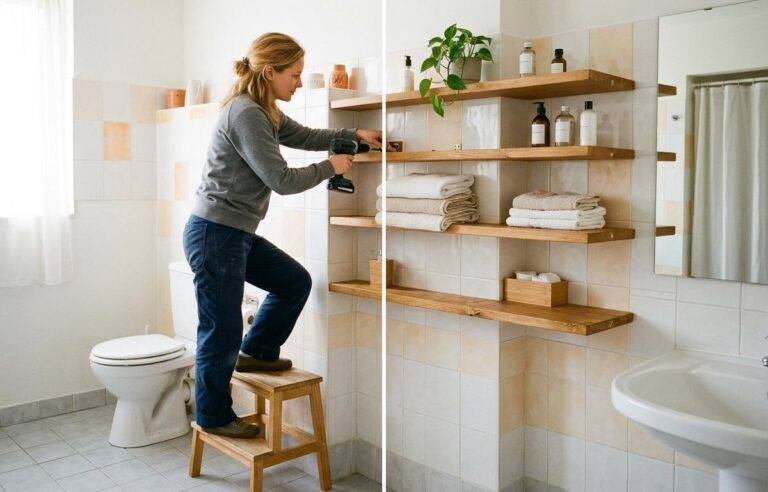
Where the table attaches matters more than any other decision. For heavier loads such as books, dishes or cookware, an Arizona Door Store trade blog strongly recommends attaching at least one bracket into a wood stud. Coohom goes further: for everyday use or anything over 15 pounds, secure your table into at least two wall studs with approved heavy-duty brackets.
Studs are the vertical framing members hidden behind drywall. WoodSnap describes them as usually spaced 16 inches on center, while another source, Tailor Wood Haven, says spacing is usually 16 or 24 inches apart. So don’t assume. Use a stud finder, confirm with a small test hole in a hidden spot, and mark the centers before you drill. Many wall mounted tables have bracket spacing that lines up with 16-inch studs, which is worth checking before you buy.
Coohom lists the common mistakes: improper stud alignment (leading to failed anchors), too little allowance for folding clearance, and underestimating the load support you need. Plastic drywall anchors alone are fine for a light shelf but a poor bet for a table you’ll lean on. If there’s no stud where you want the table, move the table or add a mounting board fixed into two studs, then attach the table to the board.
Renters have extra constraints. Check your lease before drilling, and plan for patching. Small screw holes can usually be filled with spackle and touched up with paint when you move out, but large anchor holes or damaged drywall are harder to hide. If drilling is off the table, a freestanding folding table or a door-hung option may suit you better, and our home organization ideas for small spaces covers lease-friendly alternatives. Whatever you do, test the install: press down firmly on the open table and tug at the edges before you trust it with real weight.
Small rooms are where a wall mounted folding table shines, but only if you measure first. Start with the folded depth. A table that sticks out 3 inches when stowed is easy to live with in a hallway; one that protrudes much more can snag clothing or block a door swing. Check the manufacturer’s folded dimensions instead of guessing, since few listings state them clearly.
Then check clearance in the open position. Coohom flags insufficient allowance for folding clearance as a classic installation error, often causing door or window conflicts. Before you mark any holes, picture the open table and the person using it. Is there room for a chair, or for you to stand without backing into a radiator, a door or a cabinet? Leave space for knees and elbows, and keep the work surface at a height that suits the user. That matters even more for seniors and caregivers who need stable, comfortable reach.
Things to avoid:
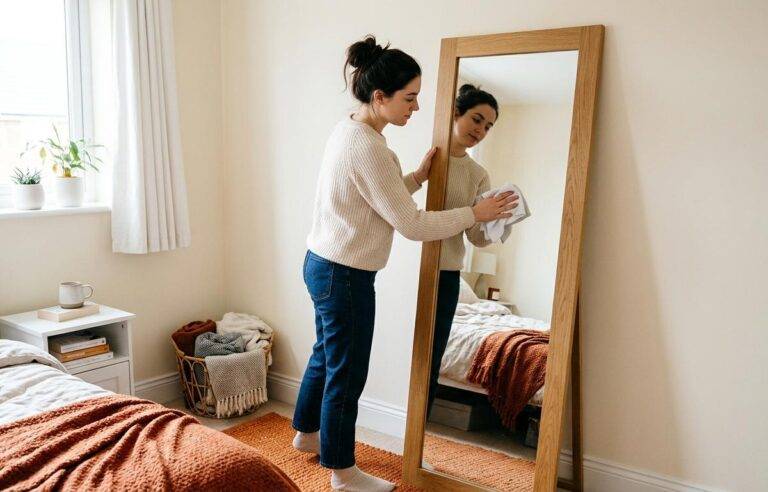
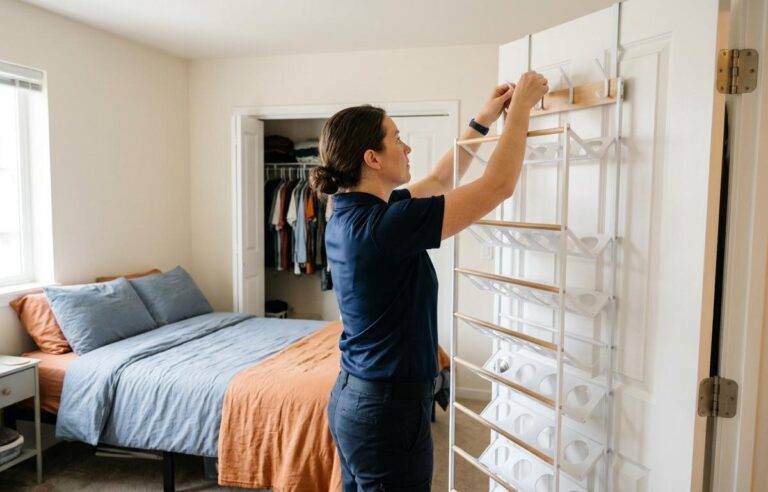
A table is only one piece of a smart small-space setup. Pairing it with space-saving wall-mounted storage or a door mirror that makes a small room feel larger can turn a cramped corner into a genuinely useful one. Measure twice, mount into studs, and a wall mounted folding table will earn its spot every day.


Leave a comment