January is when most of us look around at the post-holiday pile-up and decide the apartment needs a reset. The urge is to buy storage right away. Don’t. As apartmentjeanie puts it, no storage product fixes a space that holds too much, so the first job is editing, not shopping.
Start with one zone, not the whole home. Pick the messiest drawer, shelf or closet corner and sort it into keep, donate and toss. Holiday gifts, leftover packaging and duplicate kitchen items are the usual suspects this time of year. Then adopt a one-in, one-out habit so the reset survives past February. If you’re wondering how to make a small apartment less cluttered, that habit does more than any organizer ever will.
Once the surplus is gone, measure before you buy anything. Jot down closet rod length, under-bed clearance, cabinet depth, the wall width beside your door and the door’s height. The advice to measure the clearance before buying containers sounds obvious, yet wrong-sized bins are the most common reason organizing projects stall. Save the numbers in your phone’s notes so they’re with you when you shop. To see what’s out there once you have them, browse the home storage organization products guide before you fill a cart.
When floor space is tight, walls and doors are the cheapest square footage you own. Vertical storage ranks among the most effective small apartment organization ideas because it turns dead height into storage you can actually reach.
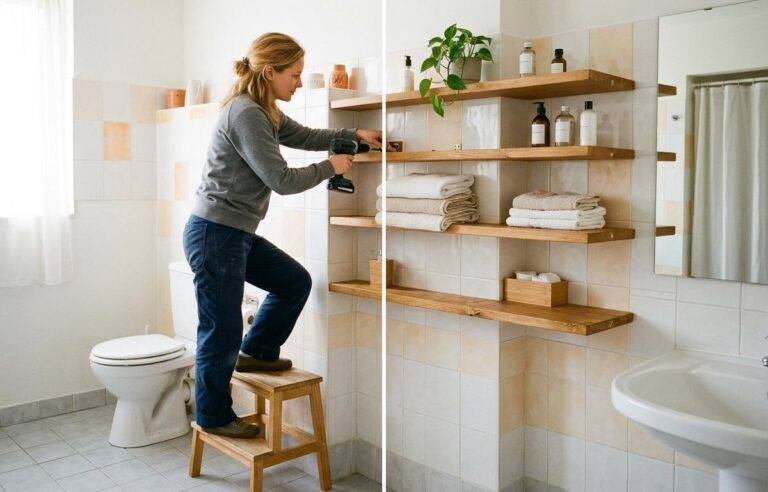
Floating shelves are the easiest way in. A few small ones above a desk, beside a bed or over a toilet hold books, plants and baskets without eating into the room. Our 4-pack of small floating shelves suits exactly this kind of spot, and the bathroom shelves collection covers wet-room versions. Put the heaviest items on the lowest shelf and leave some empty space; a wall packed edge to edge reads as clutter.
Pegboards and hook rails shine in kitchens, craft corners and entryways because you can rearrange them as your needs change. A kitchen hanging organizer rack with hooks frees up drawer space by moving mugs, utensils and pans onto the wall.
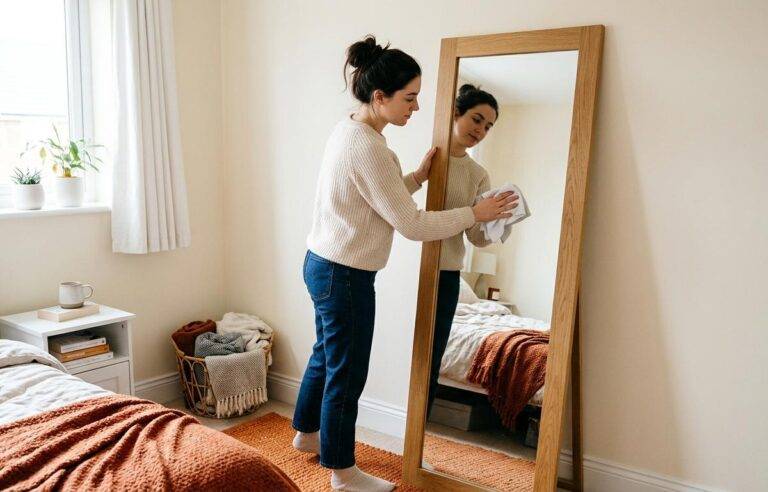
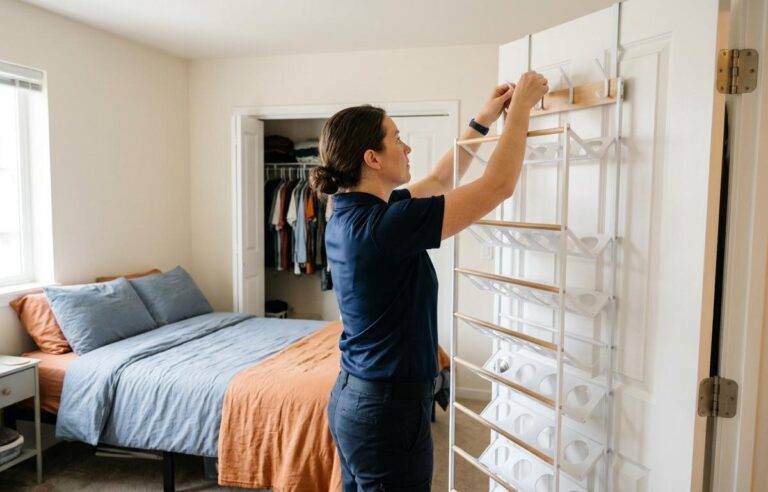
Doors are the most overlooked surface. Over-door organizers may be sold for shoes, but as Macy’s storage guide notes, they also swallow scarves, toiletries and cleaning supplies. The back of a kitchen door can hold small pantry items or everyday utility odds and ends too, a point Redfin’s kitchen guide makes well. If you have a full-length mirror to place, a door mirror does double duty by adding light and a sense of depth.
Plenty of renters ask how to organize a small apartment without buying new furniture. Honestly, you can get a long way by using what you already have more cleverly. But when you do replace something, pick pieces that earn their footprint. Furniture that does two jobs cuts the total number of pieces you need, which keeps a small apartment from feeling cramped.
The classics are classics for a reason: a bed with built-in drawers, a storage bench at the foot of the bed or by the door, an ottoman with a lift-off top, and nesting or lift-top tables that open up only when guests arrive. Our space-saving furniture page gathers pieces in this spirit. The test for any purchase is simple. Does it hold something, fold away, or serve two purposes? If it does none of these, it probably doesn’t belong in a small room.
If you have barely any closet, think in layers. A freestanding rack or an expandable wardrobe divider can carve one cupboard into zones for hanging, folded and seasonal items. Slim hangers help too; Tidymalism claims they take up half the space of bulky plastic or wooden ones. That’s a general tip rather than a tested figure, but it costs next to nothing to try.
Under the bed is prime real estate, especially in January when bulky winter bedding and holiday decor need a home. Low-profile bins on wheels or with lids keep dust out and slide in easily. Measure the clearance first, then stash off-season clothing, spare linens or shoes there. The same trick works under a sofa, where flat boxes can hold board games or cables.
With the big pieces sorted, a few targeted upgrades in the busiest rooms bring the most daily relief.
Entryway. Even a corner can become a drop zone. According to Budget Nest Studio, the essentials are a place to sit, hooks for coats and bags, a tray or basket for keys and mail, a mirror and some shoe storage. In January, when coats, scarves and wet boots pile up, this setup stops the mess from creeping into the living room. A narrow bench with a shoe shelf below and a row of wall hooks above is often all it takes.
Kitchen. For storage ideas that work best in small kitchens, start inside drawers and cabinets, then move to the walls. Drawer dividers stop utensils from becoming a tangle, and a pull-out unit makes deep cabinets usable; the kitchen storage rack with slide rails is built for that job. Be ruthless about gadgets, too. Our guide to what to buy and skip in a kitchen gadget set helps you keep only the tools that justify their drawer space, and the kitchen gadgets collection has compact options when something is genuinely missing.
Bathroom. Small bathrooms run out of surface fast. Use the vertical space above the toilet and inside the shower. Tidymalism suggests adding a second tension rod in the shower to hang caddies for extra shampoo and soap storage. Our guide to choosing shower shelves walks through sizing and weight, which matters if you want things within comfortable reach. For households with seniors or caregivers, keep daily items between waist and shoulder height so nobody has to stretch or bend, and stay clear of the zone around any grab bars.
Many of the best upgrades are reversible, which is welcome news if your lease has opinions about drill holes. Adhesive hooks, suction-mounted caddies, tension rods, over-door organizers, freestanding racks and furniture-based storage all leave walls untouched. Check the weight rating on every adhesive product and follow the surface-prep instructions; the usual failure is a hook stuck to a dusty or damp wall. For wet areas, products made for the job, like a suction-style bathroom shelf, are a safer bet than improvising.
To keep costs down, sequence your spending instead of buying everything at once:
A handy rule for buy-versus-DIY: improvise containers and dividers, but buy anything that carries weight, hangs over a door or sits in a wet area, where a poor fit can cause damage or injury.
Do organizing tips actually make a space feel bigger? Not literally, but clear surfaces, defined zones and visible floor change how a room feels, and that’s often what people mean. Do you need a remodel? Rarely. Most small-space frustration comes from too many things and too few places for them, and both are fixable without touching a wall.
Worried about ordering the wrong size? Measuring first removes most of the risk, and with free shipping and a 30-day money-back guarantee, a miss isn’t a loss. Start with one zone this January, finish it, and let that small win carry you to the next.


Leave a comment